
A Guide to At-Home Testing Kits
At-home testing kits offer a remarkably simple way to learn more about your health and ancestry, all from the comfort of your own home. These kits let you collect a sample—usually just saliva or a quick cheek swab—and mail it off to a lab. In return, you get access to personal data that, until recently, would have required a trip to a clinic.
Your Health, Your Home: The Rise of Personal Insights
In the past few years, there’s been a major shift in how we think about our well-being. People are no longer content with just a yearly check-up; they want ongoing insights into their health. This growing curiosity has fueled the incredible popularity of home testing kits, turning them into powerful tools for personal discovery.
The appeal is obvious: these kits offer convenience and a level of privacy you just can’t get anywhere else. You can collect your sample in your own space, whenever it works for you, without the hassle of scheduling appointments or traveling. This sense of control is a huge part of why at-home health monitoring has taken off. People are taking a more active role, aiming to understand their bodies better and make smarter decisions with personalized data.
Why Are So Many People Choosing At-Home Tests?
But this trend is about more than just convenience—it’s about empowerment. Home testing kits unlock a wide range of information, whether you’re satisfying a long-held curiosity or just building a baseline for your health. The main reasons people turn to them are:
- A Desire for Preventative Information: Many people are simply looking for wellness insights that can help guide their lifestyle choices.
- Privacy and Discretion: The ability to perform a test at home provides a level of confidentiality that’s essential for sensitive matters.
- Accessibility and Ease of Use: Today’s kits are designed to be incredibly user-friendly, with clear instructions that make the process straightforward for anyone.
The market for these kits certainly reflects this growing interest. In Saudi Arabia alone, the at-home testing market was valued at around $56.18 billion USD in 2024 and is expected to climb to $77.33 billion USD by 2032. This boom is part of a larger regional shift toward embracing easy, home-based health solutions. You can dive deeper into the numbers in the Saudi Arabia at-home testing kits market analysis.
At their core, home testing kits represent a move toward democratizing personal information. They place valuable data directly into the hands of the individual, fostering a greater sense of ownership over one’s personal story and well-being.
Think of this guide as your roadmap. We’ll walk you through the different types of tests out there—from wellness and ancestry to paternity and relationship verification. We’ll break down how they work and what you can learn, showing you how these kits can provide the clarity and answers you’re looking for.
If you have specific questions or need a little guidance on which test is right for you, feel free to contact us on WhatsApp. We’re here to help you navigate your options and can provide more details.
Navigating the Types of Home Testing Kits
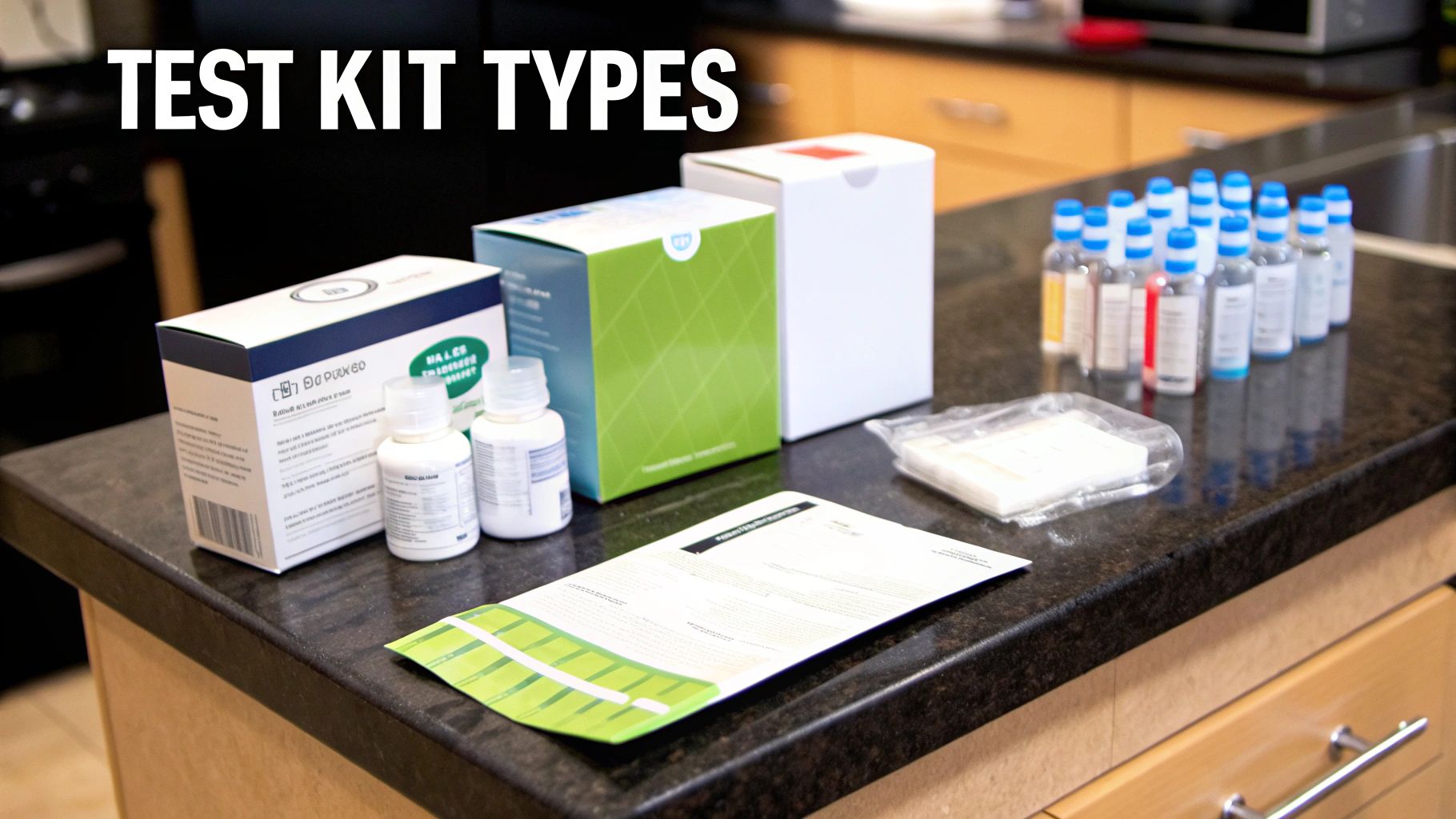
Once you decide you’re ready to learn more about yourself through DNA, you’ll find a whole world of home testing kits out there. Each one is built to answer a different kind of question. Choosing the right one is really just about figuring out what you want to know.
Are you curious about where your family came from? Do you need to confirm a biological relationship? Or are you hoping to get a better handle on your personal wellness? These kits unlock information that, not too long ago, was completely out of reach for most of us.
Let’s break down the main categories to help you find the perfect fit.
Uncovering Your Past with Ancestry Kits
This is easily one of the most popular reasons people get into DNA testing. Ancestry kits are all about reading your genetic storybook, revealing connections to places and people from hundreds, even thousands, of years ago.
Think of it this way: your DNA is like a unique collection of family recipes passed down through generations. An ancestry test analyzes these “recipes”—your specific genetic markers—and compares them to a huge global database. By finding similarities, it can map out where your ancestors most likely called home.
With an ancestry kit, you can:
- Discover your ethnic origins with a detailed percentage breakdown of your heritage.
- Find and connect with distant relatives you never knew you had.
- Build out your family tree with newfound branches and surprising connections.
Confirming Relationships with Paternity and Kinship Tests
Another major use for at-home kits is to get clear, science-backed answers to personal questions about family ties. Paternity tests are the most common, but these kits can also confirm other relationships, like with a mother, a sibling, or grandparents.
The process is designed to be simple and completely private. It just takes a quick cheek swab from everyone involved to get the DNA needed for comparison. The lab then zeroes in on specific genetic markers to see if a biological link exists. If you’re wondering what comes next, learning more about understanding paternity test results can offer valuable clarity.
It’s important to remember that kits you use at home are typically for your own information—what we call “peace of mind” tests. They are not intended for legal use. For matters like court cases, the collection process must follow a strict “chain of custody.”
If you have questions about which test is right for your situation, whether for personal knowledge or other needs, we encourage you to contact us on WhatsApp. We’re here to help guide you and provide more details.
Gaining Personalized Wellness Insights
Moving beyond family trees and relationships, a growing field of home testing is focused on wellness. These kits look at genes linked to different aspects of your lifestyle, from how your body handles certain foods to your genetic likelihood for certain physical traits.
To be clear, these tests are not for diagnosing a medical condition. They are about giving you information that may help you make smarter choices about your diet, fitness, and daily habits. A wellness report might reveal, for instance, how your genes could affect your sensitivity to caffeine or what kind of exercise your body is built for.
Comparing Common Home Testing Kits
With so many options, a side-by-side comparison can really help clarify things. Here’s a quick overview of what each type of kit offers.
| Test Type | Primary Purpose | Sample Required | Typical Information Provided |
|---|---|---|---|
| Ancestry Test | To discover ethnic origins and find relatives. | Saliva or Cheek Swab | Ethnic percentage breakdown, DNA relative matches, migration patterns. |
| Paternity Test | To confirm a biological father-child relationship. | Cheek Swab | A probability percentage of paternity, confirming or excluding the relationship. |
| Wellness Test | To gain insights into genetic traits related to lifestyle. | Saliva or Cheek Swab | Information on traits like sleep patterns, food sensitivities, and muscle type. |
Ultimately, each of these home testing kits opens a different door. By deciding what you’re most curious about, you can easily pick the one that will give you the answers you’re looking for.
How to Collect Your DNA Sample at Home
The thought of collecting your own DNA might bring up images of a complicated science experiment, but the reality is much simpler. Most home testing kits today are designed to be incredibly user-friendly. The whole process feels less like a clinical procedure and more like a quick five-minute project.
Think of it like following a simple recipe—if you follow each step carefully, you’re guaranteed a great result. We’ll walk you through everything, from the moment you open the box to when you seal it up for the lab, so you feel totally confident in what you’re doing. The goal is to make it easy and stress-free.
This image breaks down just how simple the at-home collection process really is.
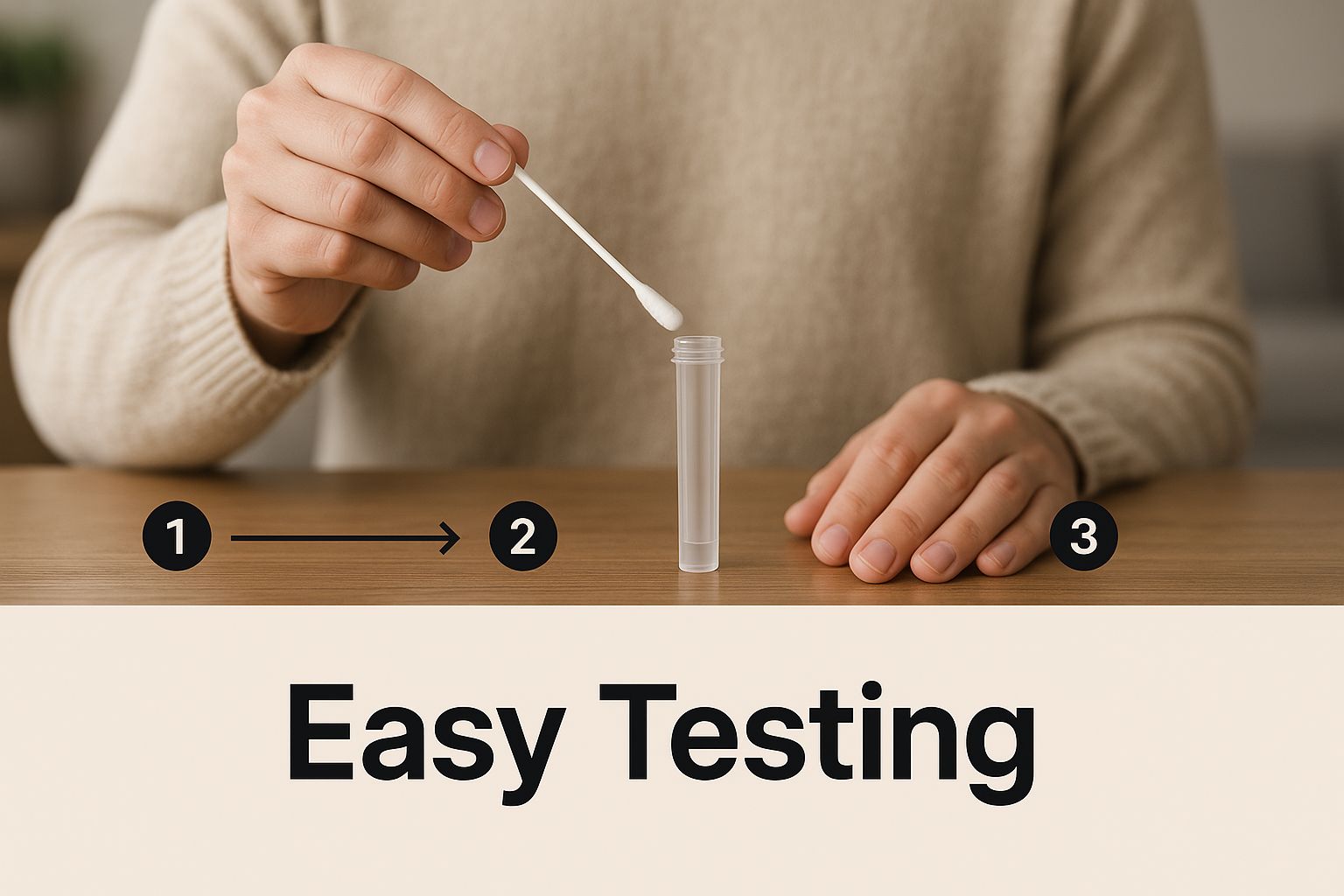
As you can see, the tools are straightforward and designed for anyone to use, which just goes to show how much convenience is built into these kits.
Preparing for a Successful Collection
Before you even tear open the swab packet, a little bit of prep work can make all the difference. The most important thing is to make sure your sample is as pure as possible, without any outside contaminants that could interfere with the lab’s analysis.
Most kits, particularly those that use a cheek swab, will ask you to avoid a few things for a short while before you collect your sample. This is a critical step, so don’t skip it!
To get the best possible sample, just follow these simple rules:
- Avoid Eating or Drinking: For at least 30 to 60 minutes before you swab, don’t eat or drink anything other than plain water.
- No Smoking or Chewing Gum: These can introduce other materials into your mouth that might compromise the sample. It’s best to wait at least an hour.
- Brush Your Teeth Earlier: Good oral hygiene is great, but make sure you do your brushing well before the 30-60 minute waiting window begins, not right before you swab.
That waiting period just ensures that the only DNA the lab finds on the swab is yours, and not leftover bits from your morning coffee or lunch.
A Step-by-Step Guide to Using a Cheek Swab
Once you’ve done your prep and waited the right amount of time, you’re ready to go. The collection itself only takes a minute or two. Here’s how it usually works.
-
Activate Your Kit Online: This is the first and most vital step. Your kit will come with a unique barcode or serial number. You have to go to the company’s website to register it, which links your physical sample to your private online account. If you forget this, the lab won’t have any idea who the sample belongs to.
-
Wash Your Hands Thoroughly: Before you touch any of the components, give your hands a good wash with soap and water to avoid contamination.
-
Open the Swab Packet: Carefully open the sterile package with the swabs inside. Be sure to only hold the swab by its plastic handle and avoid touching the soft cotton tip to anything.
-
Collect the Sample: Take one swab and firmly rub and rotate the cotton tip against the inside of your cheek for about 30-60 seconds. You want to use gentle but firm pressure to collect enough cheek cells. If your kit includes a second swab, just repeat the process on your other cheek.
-
Secure the Sample: Pop the swabs into the collection tube or envelope provided in your kit. Follow the instructions to make sure it’s sealed up tight to keep the sample protected on its way to the lab.
Packaging and Sending Your Kit
With the collection done, the last thing to do is get your sample ready for its journey. Your kit will include a pre-addressed and usually prepaid return mailer, so it couldn’t be easier.
Before you seal everything up, do a quick double-check. Did you activate your kit online? Are all the components back in the box? Forgetting to activate the kit is one of the most common reasons for a delay in getting results.
Place your sealed sample into the return packaging. Once it’s all packed up, simply drop it off with the designated mail carrier. From there, the lab takes over, and you’ll get an email notification as soon as your results are ready.
For any specific questions or if you need a little help along the way, you can always contact us on WhatsApp. We’re here to provide more information and support you through the process.
How Accessible Testing is Changing Regional Health
The rise of at-home testing kits is about so much more than satisfying personal curiosity. These simple kits are playing a huge part in the bigger picture of community health, especially across the Middle East and Africa. When people have easy access to information about their own bodies, they may feel more empowered to take charge of their health, which is a massive boost for public health goals.
This move toward convenient, at-home options couldn’t be more timely. In a region where specific health trends like diabetes and various infectious diseases are present, early awareness can be very helpful. Home testing kits offer a private, straightforward first step for people to gain awareness, helping to build a more informed and health-conscious population.
And this isn’t just a fleeting trend—it’s a market that’s booming. The rapid test kit market in the Middle East & Africa was valued at a whopping 849.64 million USD in 2022 and is on track to hit nearly 1.17 billion USD by 2030. What’s driving this? The growing prevalence of conditions like influenza, malaria, and diabetes. Take Saudi Arabia, for instance, where an estimated 4.27 million adults had diabetes in 2021. The need for accessible monitoring tools is undeniable. You can dive deeper into the numbers by checking out the full report for more details on regional market trends.
Antigen vs. Antibody Tests: What’s the Difference?
When you start looking into tests for infectious diseases, two terms pop up constantly: antigen and antibody. They sound similar, but they’re looking for completely different things. Getting this distinction is key to understanding what a test result might be telling you.
Think of it this way: an antigen test is like a security guard checking IDs at the door. It’s looking for active pieces of the virus to see if it is currently present. These tests are fast and give you a real-time snapshot.
An antibody test, on the other hand, is like a detective reviewing security footage from last week. It’s not looking for the virus itself, but for the “memory cells” (antibodies) your immune system may have built to fight it off. This tells you if you may have had an infection in the past.
In short, antigen tests answer, “Is the virus present right now?” while antibody tests answer, “Was the virus present before?” Both can be valuable for informational purposes, just for different reasons.
Empowering People, Strengthening Communities
The real power of at-home testing kits is how they close the gap between wondering and knowing. By putting these tools directly into people’s hands, we’re helping to create a culture where checking in on your health is just a normal part of life.
This has a ripple effect across the entire community:
- Encourages Proactive Health Habits: When testing is easy and private, people may be more likely to monitor their health regularly instead of waiting for a problem.
- Promotes Early Awareness: These kits can provide an early indication, which may prompt individuals to seek professional medical advice sooner.
- Removes Old Barriers: They eliminate common hurdles like taking time off work, traveling to a clinic, or the discomfort some feel in a medical setting, especially for an initial screening.
Ultimately, the more accessible testing becomes, the more informed we all are. And when individuals have a clearer picture of their own health, it contributes to a stronger, more resilient community for everyone.
For guidance on the types of informational tests available and how they might fit your needs, please contact us on WhatsApp. We can provide further details.
Taking a Closer Look with Advanced Testing Technologies

While many home testing kits give you quick and handy insights, there’s another, more powerful class of diagnostics that’s becoming easier to access. These advanced methods offer a much deeper and more precise look at your biological information, especially when accuracy is the absolute top priority.
One of the best-known examples is the RT-PCR (Reverse Transcription Polymerase Chain Reaction) test. The name might sound complicated, but the idea behind it is pretty simple. It’s a method built from the ground up to find even the tiniest traces of genetic material with incredible accuracy.
A Deeper Level of Detail
To really get the difference, a simple analogy helps. Think of a standard rapid test as a quick, hand-drawn sketch. It’s fast and gives you a good general idea of the picture, but it can miss some of the finer details.
An RT-PCR test, on the other hand, is like a high-resolution digital photograph. It captures an unbelievable amount of detail with stunning clarity, leaving almost no room for doubt. This extreme sensitivity is what makes it the gold standard for spotting specific genetic sequences, especially for infectious diseases where every little detail counts.
This level of precision is exactly why technologies like RT-PCR are so trusted. They work by taking a tiny piece of genetic material and making billions of copies of it. This amplification makes it easy for scientists to see if it’s there, even if the original sample only had a minuscule amount.
Advanced Tests Are Becoming More Accessible
Not long ago, these super-accurate tests were only available in specialized labs. But we’re seeing a clear trend of these powerful diagnostic tools becoming more available for home use right across the AE region. It’s a shift driven by a growing demand for reliable and precise health information.
The market for these advanced home testing kits is growing steadily. In the Middle East and Africa, RT-PCR test kits brought in sales revenue of about $82.53 million USD in 2024. This growth is being pushed by greater public health awareness and big investments in diagnostic capabilities, especially in countries like the UAE and Saudi Arabia. You can dive deeper into this trend by reading the full RT-PCR test kits market report.
This shift empowers people with access to a higher caliber of informational testing, all from the comfort of home. It’s a clear sign that we’re moving toward a future where detailed personal health insights are within everyone’s reach.
For more information about the different testing technologies out there and to figure out which might be right for your informational needs, please contact us on WhatsApp. We can help you understand your options and provide more details.
How to Choose the Right Home Testing Kit
With so many home testing kits on the market, picking the one that’s right for you can feel like a pretty big decision. The best way to start? Figure out exactly what question you’re trying to answer.
Before you even start browsing, take a minute to think about your goal. Are you piecing together your family tree? Looking for a few personal health insights? Or do you need clarity on a specific family relationship? Knowing your “why” is the most important first step—it instantly cuts through the noise and points you in the right direction. Each kit is built for a specific job, so matching your goal to the test’s purpose is everything.
Key Factors to Consider
Once you have a clear goal in mind, a few key factors will help you compare your options and make a smart choice. It’s not just about the test itself, but the whole experience—from the moment you open the box to how you interpret the results.
Here’s what you should be looking for:
- Clear Instructions: The kit absolutely must come with simple, easy-to-follow steps. A confusing collection process is the fastest way to get an invalid sample, so clarity is key.
- Transparent Process: You should know exactly what happens to your sample after you mail it back. A clear timeline for when to expect your information is a must.
- Customer Support: If a question pops up, is there someone you can easily get in touch with? Good, reliable support makes the whole process feel much more secure and stress-free.
Remember, the information from these at-home kits is for your personal insight and education. It is not intended to be a medical diagnosis or a legally binding result.
Making Your Decision with Confidence
Choosing the right home testing kit really comes down to matching the test’s purpose with your personal goals. You also want to make sure the company provides a clear, supportive process from start to finish.
For example, if you’re exploring family connections, you’ll want a kit designed specifically for that purpose. You can get a better sense of the different options by looking into the details on DNA relationship testing pricing and what each service includes.
Ultimately, the best kit is the one that gives you the specific information you’re after in a way that feels straightforward and trustworthy.
Making the right choice ensures you get the answers you’re looking for. If you’re not sure which test is the best fit for your situation or just have questions about how it all works, we’re here to help guide you.
Please contact us on WhatsApp to know more. We can provide personalized guidance to help you find the right fit for your informational needs.
Answering Your Questions About Home DNA Tests
It’s completely natural to have questions when you’re thinking about a home DNA test. This kind of technology gives you access to a lot of powerful information, and the more you understand, the more confident you’ll feel. We’ve put together answers to some of the most common questions we hear to bring you some clarity.
While these kits are made to be simple, knowing a bit more about what makes them accurate, how your privacy is handled, and what to do with your results is always a smart move. Let’s walk through it.
How Accurate Are These Kits?
This is usually the very first thing people ask, and for good reason. The reliability of a home testing kit really comes down to two things: the kind of test you’re taking and how well you stick to the collection instructions. For any lab-based DNA test, following the simple prep steps—like not eating or drinking for a short time beforehand—is critical to getting a clean, usable sample.
Once your sample gets to the lab, its own standards and procedures take over. Reputable labs have incredibly strict quality controls to make sure the data they produce is spot-on. If you’re looking for answers about family connections, exploring the different kinds of DNA relationship tests can give you a clearer picture of the process.
Is My Personal Data Kept Private?
Privacy is a huge deal, and it should be. When you send off a DNA sample, you’re placing your trust in that company to handle your most personal information. Any reputable company takes that responsibility very seriously and has strong measures in place to keep your data safe.
It’s standard practice for established providers to use data anonymization. This means they strip your personal details (like your name and address) away from your genetic data. They also use secure, encrypted servers to store everything, walling it off from unauthorized access.
That said, it’s always wise to do a little homework yourself. Before you choose a service, take a few minutes to read their privacy policy. That document will tell you exactly how your data is used, stored, and protected, putting you in control.
How Do I Interpret My Results?
When you get your results, it’s important to remember their purpose. The information from home testing kits is meant for educational and informational use only. Think of it as a guide or a starting point for discovery, not a medical diagnosis.
If any questions or concerns pop up from your results, especially about health or wellness, the next step should always be to talk it over with a qualified healthcare professional. They can put the information into the right context and help you understand what it means for you and your health.
How Long Does It Take to Get Results?
The wait time for results can vary quite a bit, and it all depends on the type of kit you’ve chosen. The technology behind the test is what determines how long the processing takes.
Here’s a quick breakdown of typical timelines:
- Rapid Tests: For things like antigen screeners, you’ll see your results right at home in about 15-30 minutes.
- Lab-Based DNA Tests: More complex analyses, like those for ancestry or paternity, need to be processed in a specialized lab. This can take anywhere from a few days to several weeks, depending on the test’s complexity and how busy the lab is.
At Suspire LLC, we are dedicated to providing clear, reliable answers to your most important questions. To learn more about our testing services and find the right solution for your needs, please contact us on WhatsApp.
Article created using Outrank
